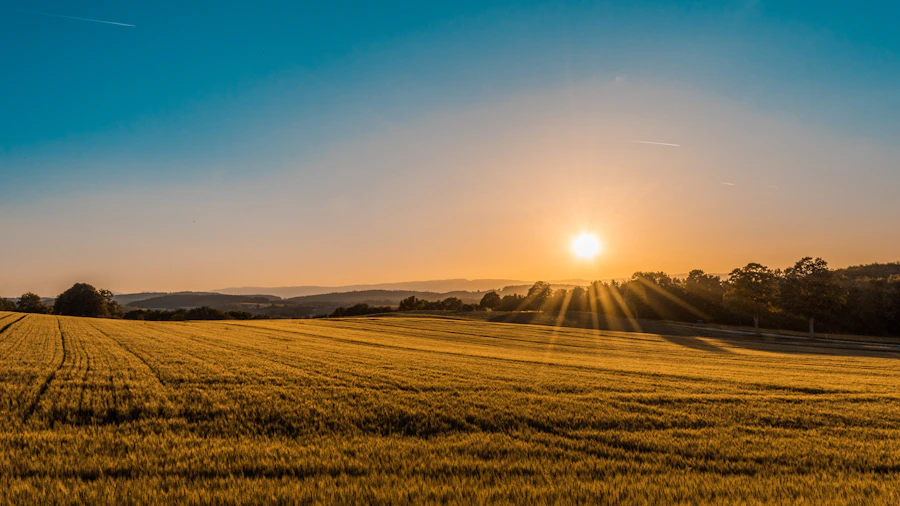
The first time Soren Beck built the cabin, in the early summer of 2012, he was thirty-one years old, freshly arrived in the Bitterroot from a sawmill town outside Eugene, and had read enough Wendell Berry to be dangerous to himself. He bought the four acres on a hand-shake from a retired forest-service surveyor for less money than he'd later spend on the second roof. The land was at the closed end of a long drainage that funnels southwest from the Bitterroot range — a place where, on the right kind of February morning, the wind blows up the canyon and the snow blows down it at the same time, so that the air itself looks confused.
He spent the first summer raising the shell. He spent the second summer realising he had raised it wrong. He took it apart in the autumn of 2014, which is the version of the story I went up to find — fourteen years and one rebuild later, with the second roof on, the second floor laid, and a man who has been alone in the same six-hundred square feet for the better part of a decade.
I wrote to Soren in the late autumn of 2025, after a friend in Stevensville had told me, half by accident, that the cabin was now finished. He wrote back five weeks later, in a letter that began "It is in fact finished, but I am not sure that finished is the word for what I want it to be," and then explained, over six handwritten pages, what he meant. We made a plan to meet in the second week of February, when the road was still passable, and Cleo Mayhew came up the next morning with three film cameras and a duffel of snow-pants and a pair of borrowed snowshoes. We slept three nights on the floor of the second cabin.
— Part i.The first cabin, built poorly.
The first cabin was a salt-box. Six hundred square feet, single-storey, gable to the south, a sleeping loft tucked under the rafters. Soren framed it in two-by-six standard, sheathed it in OSB, wrapped it in a Tyvek that was on sale at the Hamilton Lowe's, and roofed it in galvanized standing-seam he'd bought from a barn dismantler outside of Stevensville for $400 and a promise. He raised it himself, mostly, with two long weekends of help from a friend named Charlie, who turned up with a circular saw and a six-pack and an unkillable optimism, and then disappeared back to Spokane for the rest of his life.
"You don't finish a place. You become a thing the place can keep."
By the autumn of the second year, Soren said, three things had become apparent. The first was that he had built the cabin facing the wrong direction — the long axis ran east-west, when it should have run north-south, with the long face open to the southern winter sun. The second was that the floor was cold in a way that suggested the framing had been done either too tightly or not tightly enough; he never figured out which. The third was that the loft was unusable — too low, too dark, too humid, and a temperature differential of fifteen degrees with the lower floor.
He spent the winter of 2013–14 living in it anyway, because he had no money for hotels, no money for a backup plan, and a stubbornness that he describes now as "almost embarrassing." In the spring, he started taking it apart.

— Part ii.The dismantling, and the long pause.
"There is a kind of attention you only learn by doing a thing twice," Soren told me on the second afternoon, while we were standing on the porch and watching the snow come down sideways. "The first time, you think you're paying attention. You're not. You're paying attention to the goal — the cabin, the finished cabin, the cabin that is going to exist when you're done. The second time, you're paying attention to the wood."
He took the first cabin apart over six weeks in the spring of 2014. He kept what he could — the porch posts, the ridge beam, a great quantity of the floor planking, every salvageable nail, two of the windows. He put the rest in a stack on the south side of the property and said he would come back to it. (Twelve years later, the stack is still there. Cleo photographed it in February. It looks like a small, very orderly hill.) Then he stopped.
The pause lasted six years. From the spring of 2014 to the spring of 2020, Soren did not build anything. He worked as a finish carpenter for a high-end residential builder in Hamilton, framed two barns, refinished a one-room schoolhouse in Sula, and read his way through several long shelves of old building books — ones with a great deal of detail about hand framing, post-and-beam, Japanese joinery, the timber-frame revival of the 1970s and 80s. He made notebooks. The notebooks, when I was given the chance to look at them, are extraordinary; they read like field guides written by a slightly more impatient John McPhee.
— Part iii.The second cabin, started in March.
He started the second cabin in the third week of March, 2020. The pandemic helped, in a perverse way — his finish-carpentry work dried up in early April, his other clients postponed everything, and a great quantity of the timber he needed was suddenly easy to come by from local mills who had nowhere else to send it. He framed the second cabin in eastern white pine and Douglas fir, on a stem-wall foundation he'd poured the previous October. The orientation was now north-south, the long face south.
He worked alone. Charlie did not come back. A neighbour stopped by on weekends with a thermos of coffee and silently watched. The second cabin took the better part of three years to raise. He laid the floor in the autumn of 2022. He moved in for the winter of 2022–23, and has been there since.
"The first time, I was building a cabin. The second time, I was being built by it."
What is striking about the second cabin, when you walk into it, is how much of the first one is still in it. The reclaimed Douglas fir floor is the original 2012 lumber, planed down again. The ridge beam is the original one. Both rafter ties are original. The two windows on the east face are original — Soren rebuilt the sashes, but the glass and the frames are the ones he set in 2012. The cabin he raised the second time is, in some quietly literal way, the same cabin.
— Part iv.What it means to be done.
I asked him, on our last afternoon, whether he thought he was finished. We were in the kitchen, which is a single counter and a wood-burning range that he found in a Helena restaurant supply for less than the cost of a microwave. The light was coming in at the angle the cabin was designed to receive — low, southern, late-winter light, the kind that turns interior pine the colour of a held lantern.
"I don't think 'finished' is what I want," he said. "There's a saying I've been mumbling to myself for a long time — you don't finish a place, you become a thing the place can keep. I think I'm a thing the place can keep, now. Which is different than being done."
He paused. The wood stove ticked in the way that wood stoves do when the firebox is settling.
"The first time, I was building a cabin," he said. "The second time, I was being built by it. There's no third cabin. But there's a great deal of staying."
— Part v through xii continue in the printed Spring quarterly, mailed in late March.
Subscribe at $48/yr.