灸
Moxibustion
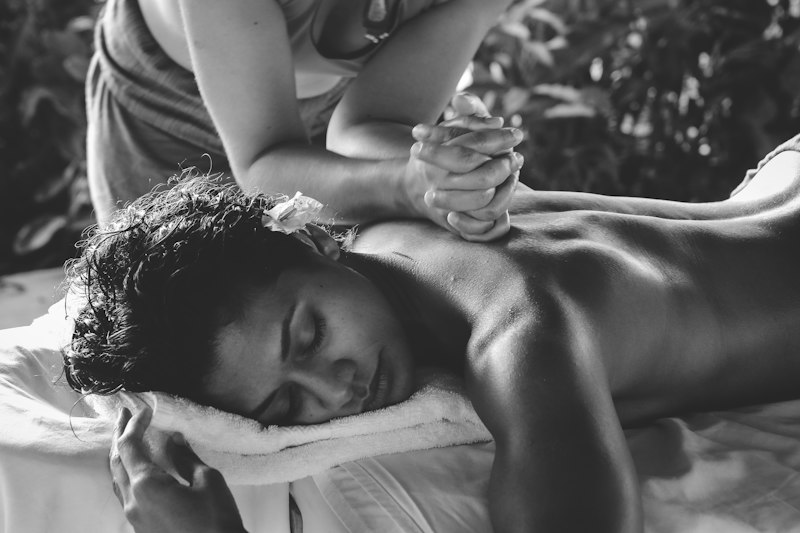
Smoldering mugwort, held above or applied indirectly to specific points. Warming, tonifying, especially useful for cold and deficiency patterns. The smell is, frankly, distinctive.
An ancient diagnostic system meeting a modern clinic. Hair-thin sterile needles, a treatment room that actually feels like a room, and a practitioner who is not in a hurry.

In Western terms: a practitioner reads a constellation of signs — pulse, tongue, history, the way you describe sleep — and selects points on the body's meridians to provoke a specific physiological response.
The needles are filiform, single-use, sterile, and roughly the diameter of a strand of hair. Most people feel a brief, dull ache at insertion (we call it de qi) and then nothing. Sessions last sixty minutes; you spend most of them resting on a heated table in dim light.
Modern research has implicated effects on the autonomic nervous system, on local microcirculation, on neurotransmitters like serotonin and beta-endorphins, and on inflammatory markers. We will not oversell this. The classical framework, the one that actually predicts what we will do in the room, is the one our practitioners trained in.
Roughly two-thirds of patients arrive with one of the following twelve patterns. We will list them honestly — what works well, what works partially, and what we refer out.
Often the strongest acupuncture indication we see. Six to ten sessions, usually paired with brief moxibustion or cupping along the Bladder channel.
Tech-neck, computer hours, side sleepers. Trigger-point needling combined with channel work along the Small Intestine and Gallbladder.
Strong evidence base. We tend to see meaningful frequency reduction over a 4-6 week course rather than instant relief.
The 3 a.m. wake-up gets a different treatment than the can't-fall-asleep pattern. We always ask about caffeine, alcohol, and screen habits first.
Acupuncture is best used alongside therapy and (when appropriate) medication. We treat the somatic layer — the held breath, the locked jaw, the wired-tired pattern.
Three full menstrual cycles is a fair test. We chart the cycle, often add custom herbs, and sometimes coordinate with a patient's OB-GYN.
We work alongside reproductive endocrinologists during IVF/IUI cycles, and on our own with patients trying to conceive naturally. We are honest about what acupuncture can and cannot influence.
Slow work. We pair acupuncture with dietary education from the classical Spleen-Stomach framework and frequently refer for gut-directed CBT.
Especially good for early osteoarthritic patterns and overuse injuries. Often combined with corrective exercise referral.
Internal herbs do most of the work here, with acupuncture supporting. A six-month commitment is realistic for chronic skin patterns.
"Why do I always get sick?" — a Wei Qi (defensive Qi) pattern. We work seasonally, especially in early autumn and late winter.
For patients who are technically functioning — working, parenting, exercising — but no longer feel themselves. Often a Five-Element treatment.
90-minute first visit. Diagnosis, root pattern, treatment plan with milestones.
Acute or chronic-flared patterns. Two visits per week, three to five days apart.
Symptoms easing. Often when herbs are introduced or modified for the next layer.
Detailed re-take of pulse, tongue, sleep, energy. Decide on continuation or rest period.
Once monthly or seasonally for most patients. Some return only as needed.
Smoldering mugwort, held above or applied indirectly to specific points. Warming, tonifying, especially useful for cold and deficiency patterns. The smell is, frankly, distinctive.
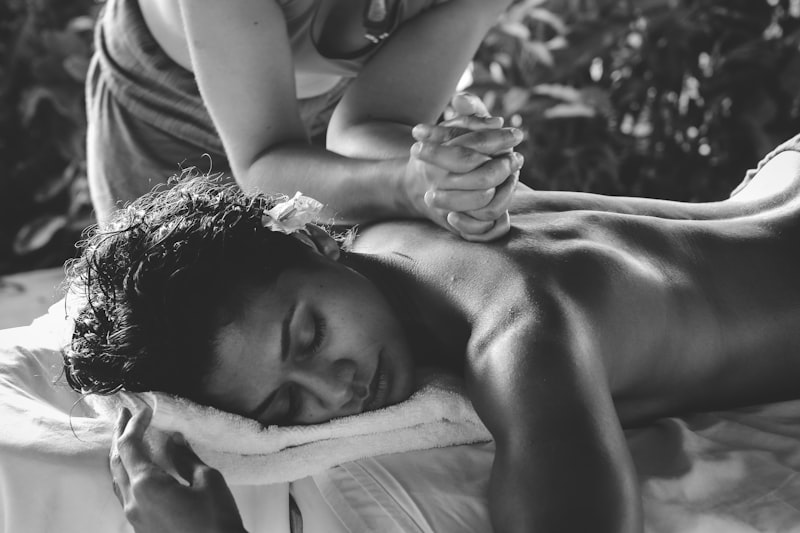
Glass cups with brief flame to create suction — fixed, sliding, or wet. Best for muscular tension, channel stagnation, and the post-flu cough that won't quite leave.
Smooth-edged tool stroked over lubricated skin. Releases superficial channel obstruction. Looks dramatic for a few days; the patient usually feels lighter immediately.
For most patients, no. The needles are roughly the diameter of a human hair. You may feel a brief, dull, achy sensation at insertion called de qi, which is what we are looking for. Then you rest in a quiet room for twenty-five minutes.
For an acute issue, often four to six. For a chronic pattern, eight to twelve over six weeks is a fair first commitment. We reassess together after the first six visits and decide what comes next.
Yes — when performed by a licensed acupuncturist who knows the pregnancy-contraindicated points. We treat fertility, first-trimester nausea, late-pregnancy preparation, and post-partum recovery routinely.
We are out-of-network. We provide superbills with the relevant CPT and ICD-10 codes; many PPOs reimburse 50–80%. Your Business accepts FSA and HSA cards directly.
Loose, comfortable clothes that can be rolled to the elbows and knees. Most points are on the limbs and the back. We provide gowns when more access is needed; nothing is ever uncovered without permission.
Tell us. Our Japanese-style practitioner uses extremely fine needles inserted to almost no depth. Many patients who said "I am the worst with needles" describe their first session as surprisingly nothing.
The intake form takes ten minutes. We will reach out within one business day to confirm a first-visit time with the practitioner who fits best.
Begin the intake